A carbon fiber front lip sits on the lower edge of a bumper, so small differences decide the result. Before you fund a run, buyers should confirm the fitment against the exact vehicle, versione paraurti, punti di montaggio, and clearance. This guide focuses on fitment checks rather than the broader sample approval process. It does not promise a universal fit or a bolt-on result on every car.
Why Front Lip Fitment Needs Confirmation Before Ordering
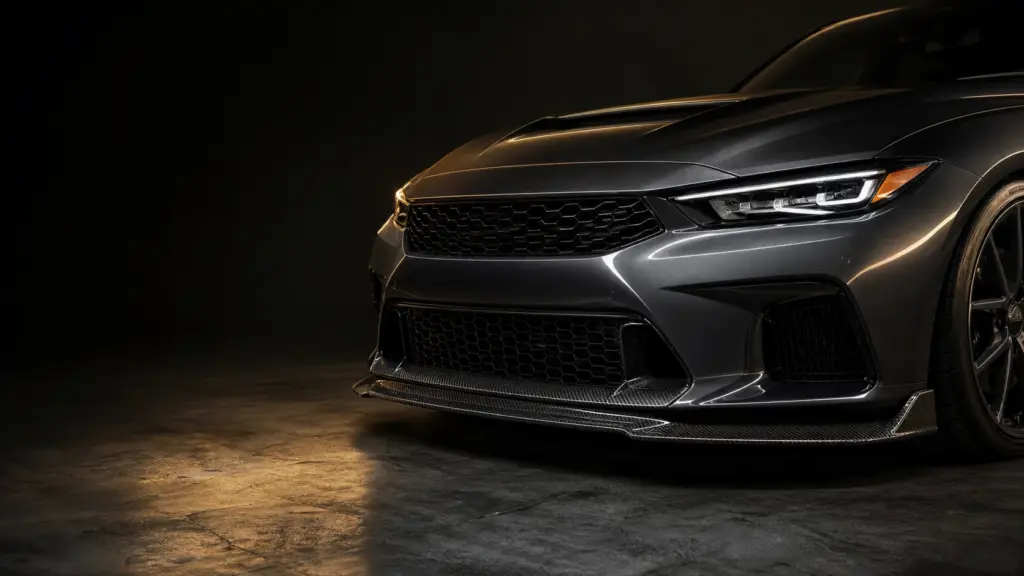
A front lip follows the curve of a specific bumper. Two cars that share a nameplate can carry different bumpers across a model run or a market region. A lip shaped for one edge can meet a gap or a mismatch on another. For a reseller who stocks parts by model, that risk multiplies across an order.
Confirmation lowers that risk before production starts. Buyers should verify the fitment target while the decision still covers one part, not one shipment. A practical check sheet keeps the conversation concrete and gives the supplier a defined reference to work from.
Front lips are also developed from inputs, not guesswork. Shasha’s published process notes that a part can be developed from a drawing, a reference part, or a 3D scan. The clearer those inputs, the more reviewable the fitment becomes. For broader part selection, see our guide on how to choose and install carbon fiber car parts.
Which Vehicle Details Should Buyers Provide
Accurate vehicle data drives accurate fitment. Give the supplier the full picture before a design is drawn.
Start with the identifiers that pin the car down. A nameplate alone is not enough, since one generation can span several bumper shapes. The table lists the fields to confirm and the source buyers should use for each. Read it as a checklist to fill, not as a promise that one lip covers every variant.
| Detail | Why It Matters | Where Buyers Confirm It |
|---|---|---|
| Make and model | Sets the bumper family | Registration or order document |
| Model year range | Identifies possible facelift differences | Manufacturer information or vehicle records |
| Chassis or platform code | Distinguishes vehicles with the same model name | Factory data, vehicle records, or project files |
| Bumper version | Defines the lower edge and mounting area | Clear photos of the fitted bumper |
| Market or trim | Bumper designs may vary by region or trim | Paese, region, and trim information |
Treat the VIN as a helper, not the whole answer. A VIN can support a base vehicle check for make, modello, and year, which the NHTSA VIN Decoder reads. It does not guarantee a platform code such as G20 or F30, so buyers should confirm those codes from factory data, vehicle records, or project files. A clear photo of the fitted bumper settles shape questions the text leaves open.
How Do Bumper Versions Affect Front Lip Compatibility
The bumper sets the surface the lip meets, so version matters. An original bumper and an aftermarket bumper can carry different lower-edge structures, and that difference can change how a lip lines up. A mid-cycle facelift can also move the bumper line while the model name stays the same. Buyers should note which bumper the car actually carries before a lip is drawn.
Bumper designs may differ by market or trim, so buyers should confirm the fitted bumper instead of relying on the model name alone. A lip matched to one bumper can sit differently on another. Where the trim level changes the front end, our carbon fiber exterior parts guide for automotive businesses explains how bumper variants shift fitment.
For a fitment review, ask for a photo from the front and both corners. Those angles show the bumper line and the gap the lip must follow. A defined bumper reference keeps the compatibility talk about the real car, not a catalog image.
Confirm Your Carbon Fiber Front Lip Fitment
Which Mounting Points and Hardware Should Be Checked
Mounting decides whether a lip holds once fitted. Shasha’s published product notes mention reserved mounting points, bracket positions, clips, and reuse of original hardware in specified cases. Buyers should confirm which of these apply to their bumper rather than assume a single method. A mounting plan read against the real car avoids surprises at install.
As a practical checklist, buyers can review the mounting set before an order:
- Mounting points: count and spacing on the bumper underside
- Bracket positions: where the lip brackets meet the car
- Hardware plan: clips, brackets, and any reused original hardware
- Drilling need: whether new holes apply to this bumper
Whether a lip needs drilling depends on the specific bumper and the agreed mounting plan. Buyers should confirm that point with the supplier instead of carrying a general assumption across a run. A written mounting note turns an open question into a checked item.
How Should Ground Clearance and Adjacent Parts Be Reviewed
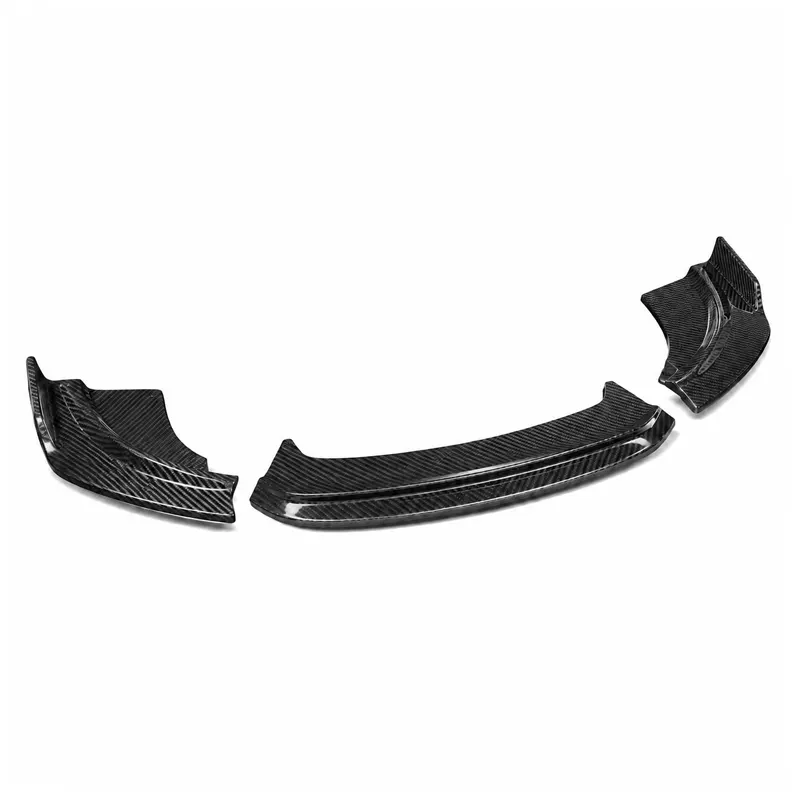
A lip changes the front edge. Review clearance and neighbors against the real car, not a catalog photo.
Ground clearance sets how deep a lip can sit on a given car. A taller curb, a lowered suspension, or a different wheel changes that margin. Buyers should review lip depth against the vehicle’s actual ride height rather than a stock image. A clearance note keeps the shape decision tied to how the car will be used.
Adjacent parts add limits that a single measurement can miss. A front sensor, a tow-hook cover, a wheel liner, or a canard bracket can sit where the lip lands. Note each neighbor on the check sheet with the space it needs. This turns a vague “will it fit” into a set of specific, answerable checks.
Where a program needs a matching appearance across several front parts, the carbon fiber front lips and splitters category lists the styles that share this bumper-edge logic. Reviewing clearance and neighbors together keeps the whole front end consistent.
What Should Be Checked During Sample Fitment
When a fitment sample is available, it turns a drawing into a physical check. Shasha’s process notes mention using a reference fixture to confirm fitment. A reference fixture can provide a defined basis for checking the part’s fitment. A sample lets buyers review the shape against the bumper or the fixture before a run is committed.
During that check, buyers can look at even contact along the bumper edge, gaps that stay consistent, and mounting points that line up with the planned holes or brackets. Note where the part needs trim and where it lands clean. This section stays on the fitment check itself. For the broader development and prototype review process, see our custom development process.
A fitment review works best as evidence, not opinion. Photos of the gap line, the mounted edge, and the alignment give the whole picture more value than a verdict in prose.
What Information Should Be Confirmed Before Bulk Ordering
Before an order is finalized, buyers should gather the fitment inputs into one record. A practical list can include the vehicle data, the bumper version, the mounting and hardware plan, the clearance review, and the notes from any sample fitment. One clear sheet keeps both sides working from the same picture.
When the check sheet covers the vehicle, bumper, punti di montaggio, sdoganamento, and sample fitment notes, the bulk decision becomes a comparison against a defined target. Fitment detail, not a generic spec, should drive that call.
If you need a partner to review a front lip against your vehicle data and a sample fitment before you commit, our team at Shasha Carbone can help you set that check sheet.
Domande frequenti
How do I know if a carbon fiber front lip will fit my car
Match the lip to your exact model year, chassis code, and bumper version, then review a fitment sample against the bumper or a reference fixture. Buyers should confirm the mounting points, sdoganamento, and gaps before any bulk order.
Can the same front lip fit different model years
Only when the bumper shape and mounting points stayed the same across those years. A facelift can move the bumper line while the name stays the same, so buyers should confirm each version against a sample or fixture.
Does a carbon fiber front lip require drilling
It depends on the specific bumper and the agreed mounting plan. Some setups use reserved points, clips, or reused original hardware, while others may need new holes. Buyers should confirm this per case, not assume a general rule.
What vehicle information should I send to the supplier
Send the make and model, model-year range, chassis or platform code, versione paraurti, and market trim, plus photos of the fitted bumper. A VIN supports a base vehicle check, but confirm platform codes from factory or project records.
Should a front lip be test-fitted before bulk production
A fitment review on a sample or reference fixture is a practical step buyers can take before committing a run. It exposes gap, edge, and mounting issues while the risk sits on one part rather than a full order.