
Carbon fiber components are widely used in automotive accessories, industrial equipment, sporting goods, drones, and other applications where lightweight construction and a distinctive appearance are important.
However, manufacturing a high-quality carbon fiber part requires more than selecting the right material.
From material preparation and hand layup to curing, trimming, coating, and inspection, each production stage can influence the quality of the finished component.
For automotive aftermarket brands, distributors, and OEM/ODM buyers, understanding common carbon fiber manufacturing defects is essential when evaluating suppliers and approving production samples.
In this guide, we explore seven common carbon fiber defects, their possible causes, and practical ways to reduce manufacturing risks.
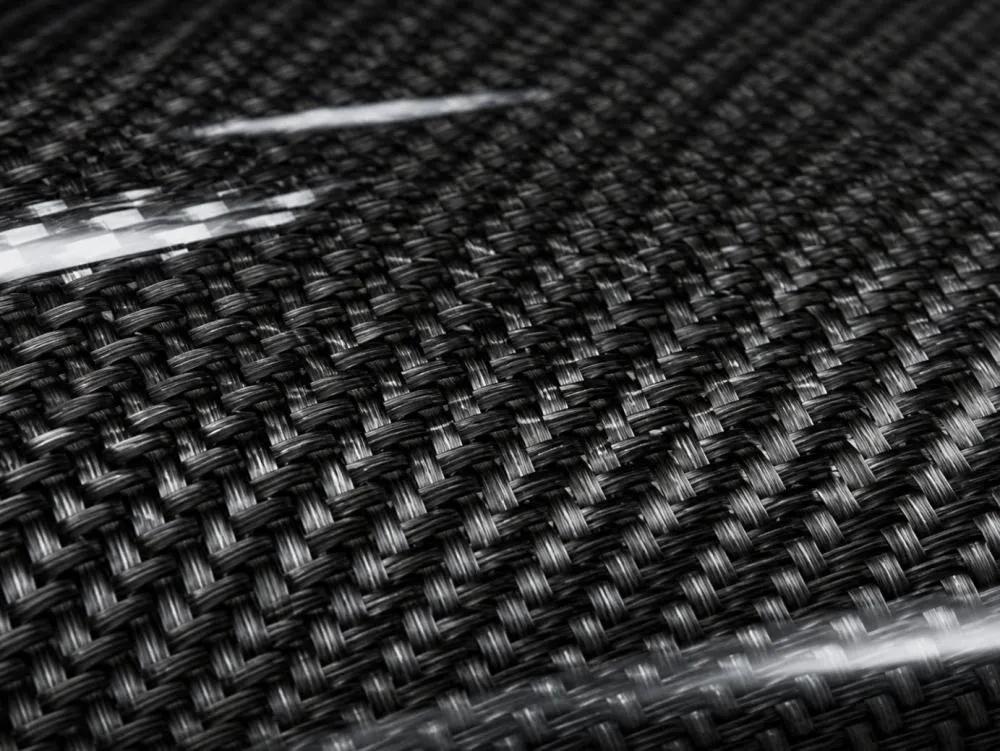
1. Air Bubbles and Voids in Carbon Fiber Parts
Air bubbles and internal voids are among the most common concerns in composite manufacturing.
Voids are small spaces within the laminate that may contain trapped air or gases. They can develop during material placement, consolidation, or curing.
What Causes Air Bubbles?
Potential causes include:
- Air trapped between carbon fiber layers.
- Inadequate vacuum bag sealing.
- Improper material handling.
- Insufficient laminate consolidation.
- Incorrect curing conditions.
- Volatile release or moisture-related problems.
The exact cause depends on the material system and manufacturing process.
Why Are Voids a Problem?
Voids can affect the appearance and mechanical performance of carbon fiber components.
For cosmetic parts, surface bubbles may create visible imperfections.
For structural applications, excessive void content can reduce certain mechanical properties, particularly those influenced by the resin and interlaminar interfaces.
How to Reduce Air Bubbles
Manufacturers can reduce void-related risks through careful material handling, controlled layup procedures, effective vacuum bagging, and suitable curing parameters.
For prepreg manufacturing, proper storage and processing conditions are also important.
At Dongguan Shasha Carbon Fiber, our manufacturing capabilities include hand layup, vacuum bagging, and autoclave curing for suitable prepreg projects.
These processes provide opportunities to control laminate consolidation, although the final quality depends on correct execution and inspection.
2. Carbon Fiber Delamination
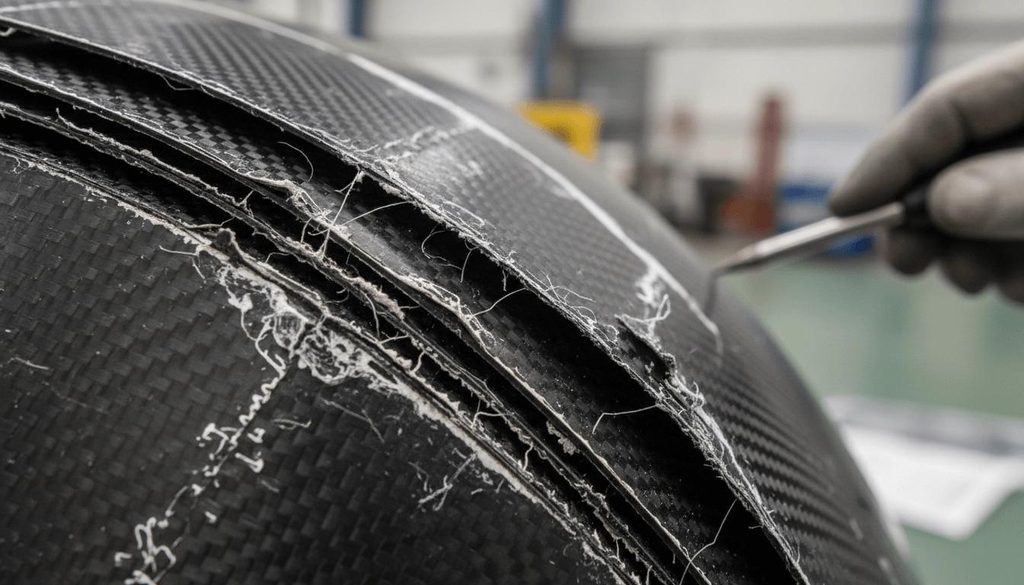
Delamination occurs when adjacent layers within a composite laminate separate from one another.
Unlike a surface scratch, delamination can affect the internal structure of a component.
Common Causes of Delamination
Possible causes include:
- Poor bonding between laminate layers.
- Contamination during layup.
- Inadequate curing.
- Impact damage.
- Excessive mechanical loads.
- Improper trimming or machining.
Delamination can also occur during service if a component experiences loads beyond its design requirements.
How to Prevent Delamination
Reducing delamination risk begins with appropriate laminate design and material selection.
Manufacturers should control material handling, layup procedures, curing conditions, and machining operations.
For applications with structural requirements, additional inspection or testing may be necessary.
Depending on the component, suitable non-destructive inspection methods may help identify internal defects that are not visible on the surface.
Important: A visually attractive carbon fiber component is not necessarily free from internal delamination.
For structural applications, inspection requirements should be established according to the intended use.
3. Carbon Fiber Weave Distortion
One of the most recognizable features of carbon fiber products is the woven fiber pattern.
For visible automotive interior and exterior components, weave appearance can strongly influence customer satisfaction.
However, carbon fiber fabric can shift, wrinkle, or distort during manufacturing.
What Causes Weave Distortion?
Common factors include:
- Complex mold geometry.
- Incorrect material positioning.
- Uneven tension during layup.
- Excessive fabric movement.
- Poorly planned ply placement.
- Inadequate handling techniques.
Curved surfaces and deep mold features can make consistent weave alignment particularly challenging.
How to Improve Weave Consistency
Manufacturers can improve cosmetic consistency by planning material placement, controlling fiber orientation, and using appropriate layup techniques.
For complex components, skilled technicians are important.
At Shasha Carbon, hand layup is part of our carbon fiber manufacturing process.
Our production approach includes careful material placement according to the requirements of each project.
For B2B buyers, it is useful to approve a representative sample showing the acceptable weave pattern before mass production.
4. Resin-Rich Areas and Uneven Resin Distribution
Carbon fiber composites consist of reinforcement fibers and a polymer matrix.
The relationship between fiber content and resin content influences the laminate’s weight, appearance, and mechanical behavior.
Resin-rich areas occur when certain regions contain more resin than intended.
What Causes Resin-Rich Areas?
Possible causes include:
- Uneven resin application.
- Inadequate consolidation.
- Local gaps between reinforcement layers.
- Poor material placement.
- Complex mold geometry.
- Process variations.
The causes vary between prepreg, wet layup, and other composite manufacturing methods.
How to Improve Resin Distribution
Appropriate material selection, laminate design, and process control can help reduce unwanted resin variation.
Prepreg materials provide controlled initial resin content, which can support more consistent manufacturing.
However, correct material placement and curing remain important.
For OEM/ODM buyers, the most effective approach is to specify the required material system and relevant quality standards before production.
5. Surface Pinholes, Scratches, and Coating Defects
Surface appearance is particularly important for decorative carbon fiber components.
Automotive trim, mirror covers, front lips, spoilers, and other visible parts often require a consistent finish.
Common surface defects include:
- Pinholes.
- Scratches.
- Uneven gloss.
- Coating contamination.
- Surface waviness.
- Poor edge finishing.
- Visible polishing marks.
Why Do Surface Defects Occur?
Surface problems may originate during molding, demolding, sanding, painting, polishing, or handling.
For example, inadequate surface preparation may affect coating adhesion or appearance.
Dust contamination can also influence the final finish.
How to Improve Surface Quality
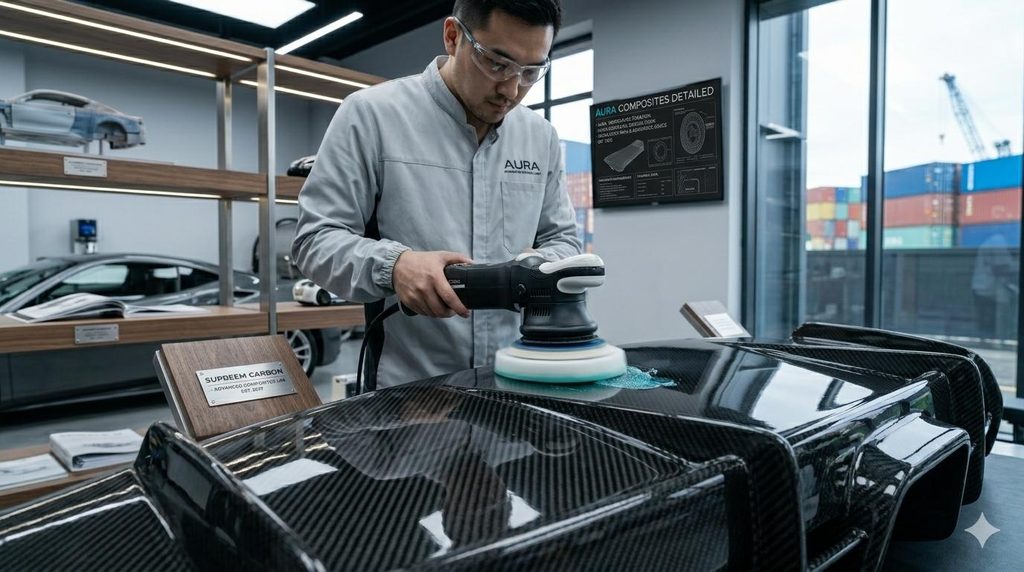
A controlled finishing process may include:
- Initial surface inspection.
- Appropriate sanding and preparation.
- Cleaning before coating.
- Application of the specified coating system.
- Controlled drying or curing.
- Final polishing where required.
- Visual inspection.
At Dongguan Shasha Carbon Fiber, our finishing capabilities include sanding, coating, and polishing.
Depending on project requirements, we can produce suitable components with glossy or matte surface finishes.
For automotive distributors and brands, agreeing on surface acceptance standards before production helps reduce disagreements over cosmetic quality.
6. Dimensional Inaccuracy and Poor Fitment
For automotive carbon fiber parts, correct fitment is one of the most important quality requirements.
A product may have an attractive carbon fiber weave and smooth surface but still be unsuitable if it does not fit the intended vehicle.
Common Fitment Problems
Examples include:
- Incorrect mounting-hole positions.
- Misaligned edges.
- Inconsistent curvature.
- Incorrect overall dimensions.
- Interference with surrounding components.
- Differences between vehicle versions.
Fitment problems may originate from inaccurate reference samples, incorrect tooling, process variation, or insufficient dimensional verification.
How to Improve Fitment Accuracy
A reliable development process should begin with accurate product information.
Customers should provide the correct vehicle model, model year, trim version, and relevant installation details.
For custom parts, technical drawings or physical samples help establish the intended geometry.
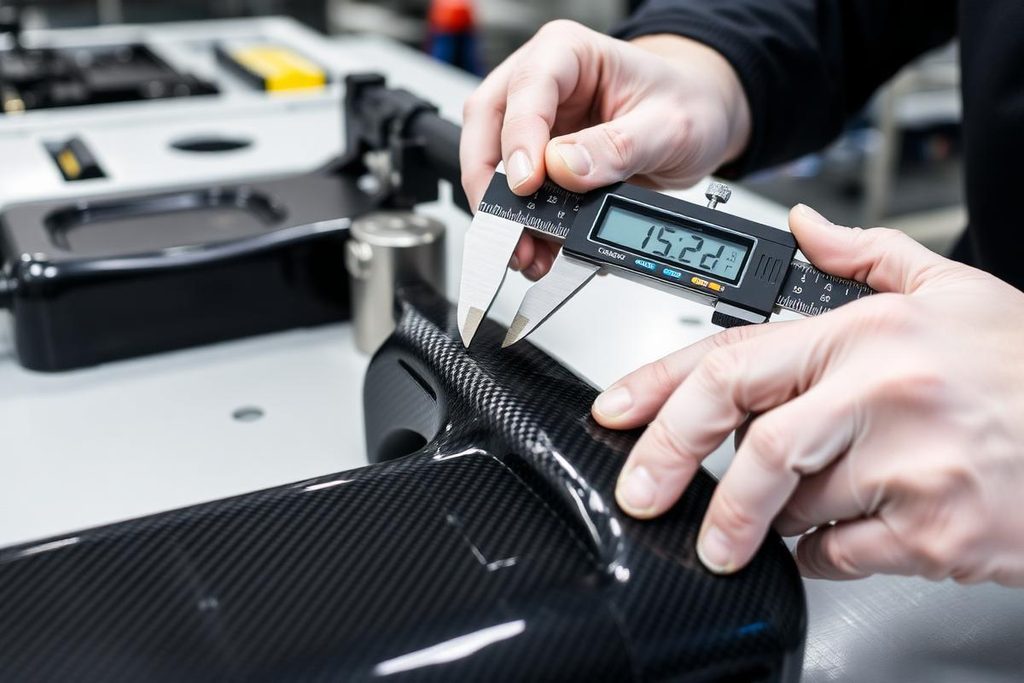
After sample production, the component should be checked against the approved dimensions and, where possible, physically tested on the intended application.
At Shasha Carbon, we support OEM/ODM projects based on customer-provided physical samples, 2D drawings, and 3D models.
Sample evaluation is an important step before confirming batch manufacturing.
7. Inconsistent Quality Between Production Batches
For wholesalers, distributors, and e-commerce sellers, consistent product quality is essential.
A supplier may produce an acceptable first sample but struggle to maintain the same specifications during repeat orders.
Why Does Batch Variation Occur?
Potential causes include:
- Changes in raw materials.
- Inconsistent layup procedures.
- Different curing parameters.
- Tooling wear.
- Variation in finishing methods.
- Inadequate inspection records.
- Uncontrolled design revisions.
Batch consistency becomes especially important when customers need repeatable appearance, dimensions, and packaging.
How to Improve Production Consistency
Manufacturers can reduce variation through standardized production procedures and clear quality requirements.
Important practices include:
Approved Reference Samples
A confirmed sample provides a benchmark for appearance and product dimensions.
Controlled Material Specifications
Using approved material specifications helps maintain consistency between orders.
Documented Manufacturing Procedures
Defined processing steps can reduce unnecessary production variation.
Dimensional and Visual Inspection
Inspection requirements should reflect the product’s intended application and customer specifications.
Change Management
Any material, tooling, design, or process changes that could affect the product should be reviewed before implementation.
For long-term B2B cooperation, consistent communication between the customer and manufacturer is essential.
8. How Can B2B Buyers Evaluate Carbon Fiber Quality?
Before choosing a carbon fiber supplier, buyers should evaluate more than product photographs and unit prices.
Here are several practical questions to ask.
What Manufacturing Process Do You Use?
Ask whether the manufacturer uses prepreg layup, autoclave curing, wet layup, vacuum infusion, or another process.
The appropriate method depends on the product requirements.
Can You Develop Products from Samples or Drawings?
For OEM/ODM projects, confirm whether the manufacturer can evaluate physical samples, technical drawings, and 3D models.
How Do You Inspect Finished Products?
Ask about dimensional checks, cosmetic inspection, fitment verification, and any application-specific testing.
Can You Provide Samples Before Bulk Production?
Sample approval helps confirm whether the manufacturer can meet the agreed requirements.
How Do You Maintain Quality Across Repeat Orders?
Discuss material specifications, approved samples, production procedures, and change management.
These questions can help buyers evaluate whether a supplier is suitable for long-term cooperation.
9. Carbon Fiber Manufacturing and Quality Control at Dongguan Shasha Carbon Fiber
Dongguan Shasha Carbon Fiber specializes in customized carbon fiber component manufacturing for B2B customers.
With approximately eight years of manufacturing experience and a 6,000-square-meter factory, we support carbon fiber product development and batch production for selected automotive and non-automotive applications.
Our manufacturing capabilities include:
- Carbon fiber prepreg preparation.
- CNC material cutting.
- Hand layup.
- Vacuum bagging.
- Autoclave curing.
- Hot press forming.
- Mold development.
- Trimming and polishing.
- Surface coating.
- Product inspection.
For custom projects, our cooperation process generally includes:
Customer Drawings or Samples → Technical Evaluation → Mold Development → Sample Production → Sample Approval → Batch Manufacturing
This approach helps establish clear product requirements before repeat production begins.
Supporting Automotive Brands and Distributors
Our automotive product experience includes interior trim, exterior accessories, and other selected carbon fiber components.
For distributors and e-commerce sellers, product fitment, surface appearance, packaging, and repeat supply are important considerations.
We work with customers to clarify these requirements during project development.
Supporting OEM/ODM Projects Across Different Industries
In addition to automotive components, we can evaluate selected carbon fiber shells, housings, and composite parts for other industries.
For shell-only projects, we supply the carbon fiber shell or enclosure. Internal components such as electronics, motors, batteries, drivers, and other accessories must be supplied or specified separately by the customer.
Our manufacturing services are primarily intended for business customers requiring product development or batch manufacturing rather than individual one-piece customization.
10. What Should You Confirm Before Mass Production?
Before approving a custom carbon fiber production order, confirm the following details with your supplier:
- Approved technical drawings or reference samples.
- Material specifications.
- Critical dimensions and tolerances.
- Required carbon fiber weave appearance.
- Surface finishing requirements.
- Mounting and assembly requirements.
- Inspection and acceptance criteria.
- Packaging specifications.
- Order quantity and production schedule.
- Procedures for handling nonconforming products.
Clear specifications help both parties understand the expected result and reduce the risk of costly misunderstandings.
Frequently Asked Questions
Are small bubbles in carbon fiber normal?
Small surface imperfections may occur during composite manufacturing, but whether they are acceptable depends on the product specification. Internal voids may require additional evaluation, particularly for structural components.
Can carbon fiber delamination be repaired?
Some composite damage can be repaired using an appropriate engineering procedure. However, repair feasibility depends on the component, damage extent, and intended application. Safety-critical components require qualified assessment.
Why does carbon fiber weave sometimes look uneven?
Complex geometry, fabric movement, and layup techniques can affect weave alignment. For cosmetic products, acceptable appearance should be agreed upon during sample approval.
Can poor carbon fiber fitment be corrected?
Minor fitment issues may sometimes be addressed through approved modifications. However, significant dimensional errors may require tooling or design changes.
Does autoclave curing eliminate all carbon fiber defects?
No. Autoclave curing provides controlled temperature and pressure, but defects can still occur if material handling, layup, vacuum bagging, or curing procedures are incorrect.
Can Shasha Carbon manufacture custom carbon fiber parts from samples?
Yes. Shasha Carbon supports suitable OEM/ODM projects based on customer-provided physical samples, 2D drawings, and 3D CAD files, subject to technical feasibility.
Conclusion
Carbon fiber manufacturing defects can affect appearance, dimensional accuracy, mechanical performance, and production consistency.
Common problems such as air bubbles, delamination, weave distortion, resin-rich areas, coating defects, poor fitment, and batch variation can often be reduced through appropriate material selection, controlled manufacturing procedures, and clear inspection requirements.
For automotive brands, distributors, and OEM/ODM buyers, choosing a suitable manufacturing partner is an important step toward achieving consistent product quality.
At Dongguan Shasha Carbon Fiber, we support business customers with carbon fiber mold development, sample production, and customized component manufacturing.
Looking for a custom carbon fiber manufacturing partner?
Send us your product drawings, 3D files, or physical sample information, along with your expected order quantity and quality requirements.
Contact Shasha Carbon to discuss your OEM/ODM carbon fiber project.
Shasha Carbon — Custom Carbon Fiber Manufacturing for Global B2B Customers.


