

The decision between carbon fiber and Aluminum is one of the most common challenges in automotive sourcing. In the discussion of Carbon Fiber vs Aluminum, choosing the right material is not only about strength or weight. In real procurement, factors such as manufacturing precision, fitment accuracy, and long-term product stability often have a much greater impact on final performance and cost control.
This article helps automotive buyers and suppliers understand how carbon fiber and Aluminum actually perform in real applications. Through this comparison, you will learn how to evaluate both materials beyond basic specifications, including structural behavior, durability in real environments, cost differences, and manufacturing influence.
Why Compare Carbon Fiber and Aluminum for Car Parts?

Material selection affects far more than weight reduction alone. In automotive sourcing, buyers must also consider production scalability, installation consistency, and long-term manufacturing reliability when comparing different materials.
Performance vs Cost Trade-Off
Carbon fiber and Aluminum are both widely used in automotive lightweight design, but they serve different priorities. Carbon fiber is commonly selected for applications where weight reduction and stiffness are critical to performance. Aluminum is more widely used in mass production because it offers lower production cost and stable manufacturing efficiency.
For automotive buyers, this comparison is ultimately a balance between performance expectations and overall cost control.
Material Choice vs Manufacturing Quality
Material selection influences the potential performance of a component, but final product quality also depends on how consistently the part is produced. In automotive sourcing, buyers often evaluate not only material specifications, but also whether the supplier can maintain stable dimensional accuracy and fitment consistency across production batches.
| Evaluation Area | Buyer Focus |
|---|---|
| Material Selection | Determines the intended structural and performance characteristics |
| Production Consistency | Affects dimensional stability, fitment accuracy, and batch reliability |
This relationship is especially important in aftermarket automotive parts, where fitment accuracy directly affects installation efficiency, customer satisfaction, and return rates.
Key Properties of Aluminum vs Carbon Fiber
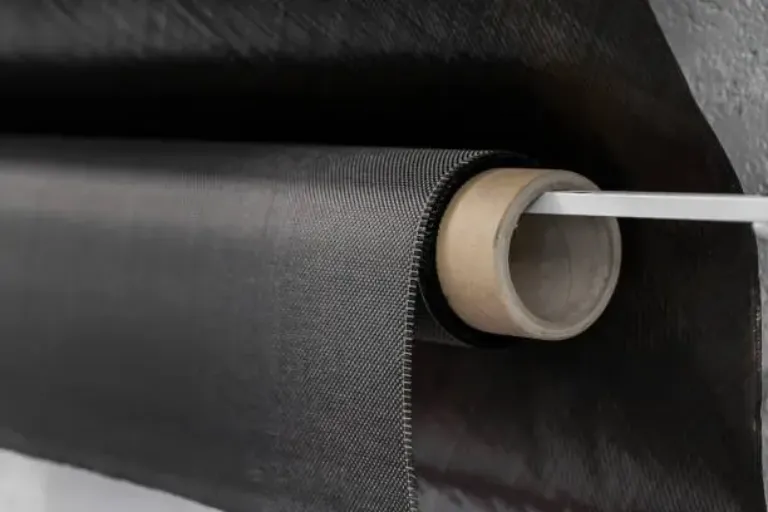
These two materials differ not only in structure but also in how manufacturing processes influence their final performance.
Aluminum Alloy Characteristics
Aluminum is widely used in automotive manufacturing because it balances weight, cost, and production efficiency. Its metallic structure allows stable forming, machining, and large-scale manufacturing across different automotive applications.
Under normal automotive load conditions, Aluminum maintains consistent mechanical behavior and reliable structural stability. It also naturally forms an oxide layer on the surface, which helps improve corrosion resistance in typical automotive environments.
Carbon Fiber Composite Structure
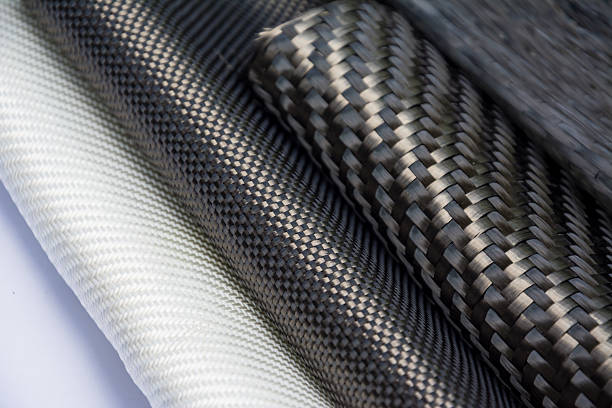
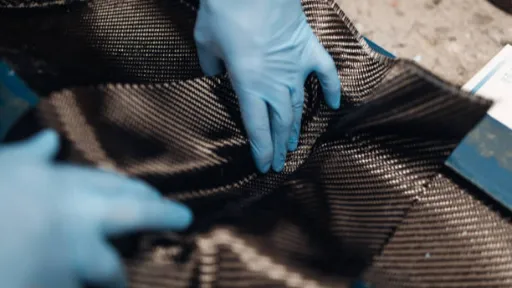
Carbon fiber is a composite material made from carbon filaments embedded within a resin matrix. Unlike metals, its internal structure depends heavily on fiber arrangement, resin distribution, and layer orientation during manufacturing.
This layered composite structure allows greater flexibility in weave layout and structural design optimization. Because material behavior changes with fiber orientation, production accuracy directly affects final part consistency.
Role of Manufacturing (Toray 3K & Autoclave)
Manufacturing method plays a critical role in determining final part quality and structural consistency.
High-grade materials such as Japan Toray 3K carbon fiber provide stable fiber texture and consistent weave appearance. When combined with autoclave molding, the manufacturing process applies controlled pressure and temperature throughout curing, which improves production stability and dimensional control.
Key manufacturing influences include:
- Resin Distribution: Helps maintain uniform bonding across fiber layers.
- Structural Density: Reduces internal void formation during curing.
- Dimensional Stability: Improves consistency for OEM-level fitment requirements.
Upgrade Your Catalog with OEM-Fit Dry Carbon

Strength, Stiffness and Weight Comparison
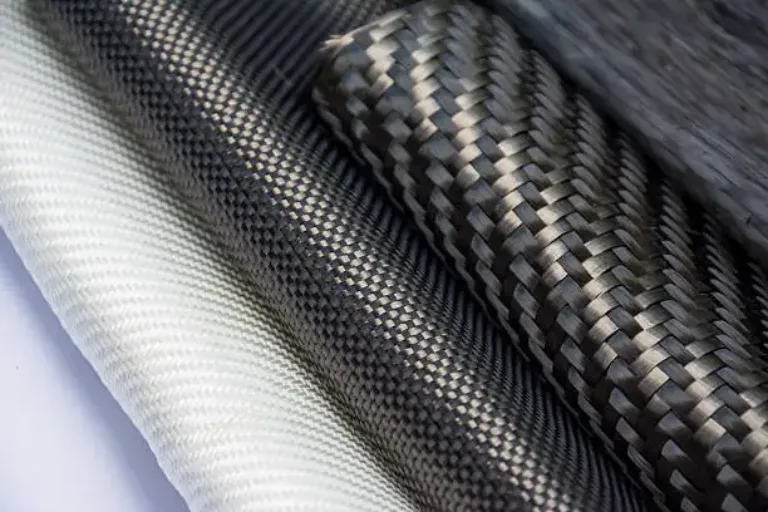
Real-world automotive performance is ultimately defined by how a material behaves under load rather than its basic composition.
Mechanical Performance Overview
Carbon fiber and Aluminum respond differently under load because their internal structures are fundamentally different. Carbon fiber concentrates strength along fiber-oriented directions, while Aluminum distributes force more evenly throughout the material structure.
In practical automotive applications, carbon fiber resists directional deformation more effectively under targeted loading conditions, while Aluminum maintains more predictable behavior under multi-directional stress and impact.
Strength-to-Weight Advantage
One of the main advantages of carbon fiber is its ability to maintain high rigidity while reducing overall component mass. Compared to Aluminum, it achieves greater stiffness at lower weight, which helps improve responsiveness in weight-sensitive automotive systems.
Directional vs Isotropic Behavior
A major structural difference between Aluminum and carbon fiber lies in how they respond to force direction.
| Material Type | Structural Behavior | Load Response |
|---|---|---|
| Aluminium | Isotropic structure with uniform material properties | Responds consistently across multiple loading directions |
| Fibre de carbone | Anisotropic composite structure based on fiber orientation | Performance changes depending on force direction and fiber layout |
Carbon fiber therefore requires more precise manufacturing control.
Durability in Real Automotive Environments
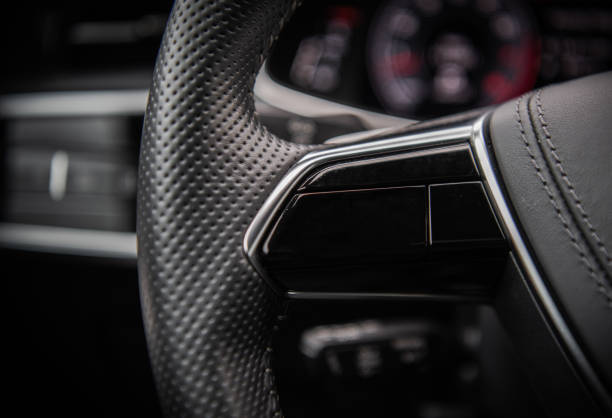
Long-term performance in automotive applications is not only determined by material strength, but also by how each material reacts to changing environmental conditions over time.
Thermal Stability and Heat Expansion
Aluminum expands more noticeably under heat compared to carbon fiber composites. In tight-tolerance automotive assemblies, this thermal expansion can gradually affect alignment and long-term fitment stability.
Carbon fiber composites maintain better dimensional stability under temperature changes, which makes them more suitable for precision-fit automotive components exposed to repeated thermal cycling.
Corrosion and Chemical Resistance
Aluminum naturally forms a protective oxide layer that helps resist corrosion in typical automotive environments. However, this protection still depends on surface conditions, exposure levels, and long-term maintenance.
Carbon fiber does not corrode in the traditional sense, but its epoxy resin matrix can degrade when exposed to moisture, chemicals, or environmental stress over time without proper sealing.
UV Exposure and Environmental Aging
UV exposure affects both materials differently. Aluminum maintains structural integrity under sunlight exposure and does not suffer from surface breakdown.
Carbon fiber requires protective coating to reduce resin discoloration and surface aging.
Cost and Manufacturing Differences
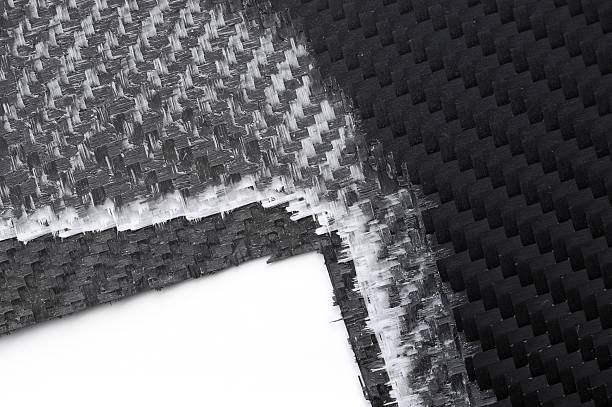
Manufacturing systems also influence production cost and fitment consistency.
Manufacturing System Comparison
| Aspect | Aluminium | Fibre de carbone |
|---|---|---|
| Production Method | Stamping, extrusion, CNC machining | Lay-up / pre-preg, autoclave curing, CNC trimming |
| Production Speed | High-speed, optimized for mass production | Slower due to multi-stage controlled processing |
| Cost Structure | Lower per-unit cost, economy of scale | Higher cost due to labor and process complexity |
| Production Focus | Efficiency and volume output | Precision and structural consistency |
Why Carbon Fiber Costs More
The cost gap between aluminum and carbon fiber is not only driven by material pricing, but also by differences in production workflow and process complexity.
Carbon fiber requires labor-intensive layering, controlled curing cycles, and multi-stage finishing, which naturally limits production speed and increases unit cost.
Manufacturing Precision and Fitment Impact
Fitment performance is directly tied to how precisely a component is manufactured.
In aluminum production, mature forming technologies ensure stable dimensional accuracy at scale. In carbon fiber manufacturing, however, even minor deviations during curing or CNC trimming can affect mounting alignment and assembly consistency.
Controlled processing—especially in trimming accuracy and curing stability—plays a key role in achieving OEM-level fitment and reducing post-installation adjustment work.
How Shasha Uses Carbon Fiber to Upgrade Metal Parts
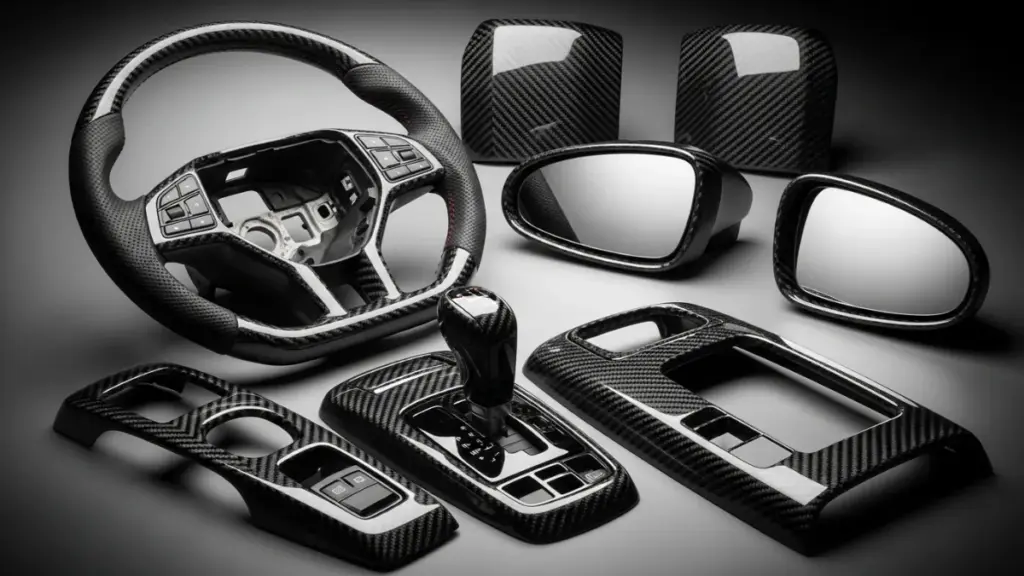
Shasha Carbon produces OEM-fit dry carbon automotive accessories using autoclave molding and CNC precision cutting.
Replacing OEM Components with Precision Accessories
Instead of producing large body panels, Shasha Carbon focuses on high-precision carbon fiber upgrades for smaller metal and plastic components that drivers interact with most. The goal is to improve key touchpoints inside and outside the vehicle by replacing standard factory parts with durable “dry carbon” alternatives.
This product strategy focuses on precision small components, where material advantages are immediately visible in both appearance and performance. Typical categories include interior and exterior upgrades such as:
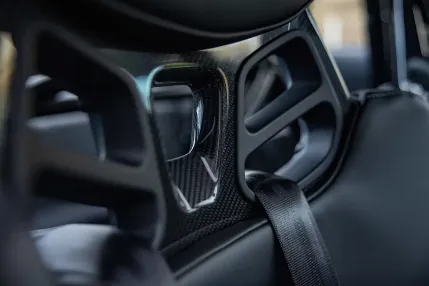
- Interior Components: Paddle shifters, center console trims, gear knobs
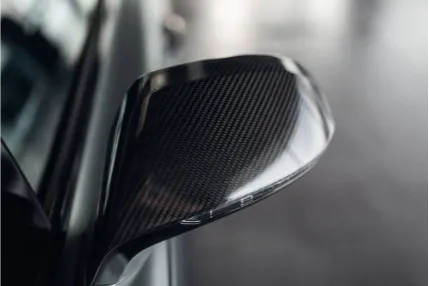
- Exterior Components: Mirror covers, antenna covers, fuel tank caps
Achieving a 1:1 Fitment with Advanced Manufacturing
Poor fitment is one of the most common problems in the aftermarket industry. Shasha Carbon solves this issue by controlling the full manufacturing process to ensure every part matches original OEM specifications with high precision.
Each component is made from imported Japan Toray 3K Carbon Fiber and formed through Autoclave Molding. This high-pressure and high-temperature process creates a dense and stable structure, improving strength and dimensional accuracy compared to standard hand lay-up methods.
After molding, CNC cutting systems—programmed with OEM reference data—finish each part with precise edges and perfectly aligned mounting points. This helps ensure stable production quality and OEM-level fitment.
Questions fréquemment posées
Which automotive components are most suitable for carbon fiber upgrades?
Carbon fiber is most suitable for interior and exterior trim components where visual upgrade and weight reduction are both desirable. These typically include non-structural parts that allow flexibility in material substitution without affecting safety or load-bearing performance.
Can Aluminum parts be upgraded to carbon fiber without redesigning the vehicle?
Yes, many non-structural Aluminum or plastic components can be replaced with carbon fiber parts without affecting the vehicle’s core structure. However, compatibility depends on accurate OEM data and precise manufacturing alignment.
Why do carbon fiber automotive parts vary so much in price?
Price differences come from production systems rather than material alone. Key factors include raw material grade, labor intensity, tooling precision, batch volume, and whether processes like autoclave curing and CNC finishing are used.
Why do two carbon fiber parts with the same material have different quality?
Because material is only one part of the final product. Differences usually come from manufacturing control, including molding method, curing stability, and CNC finishing accuracy. Poor process control can lead to inconsistent fitment even with high-grade carbon fiber.
What causes poor fitment in aftermarket carbon fiber components?
Fitment issues are often caused by dimensional deviation during production rather than installation errors. Inconsistent curing, weak tooling precision, or lack of OEM reference data during CNC trimming can all lead to misalignment during installation.
Final Thoughts
Carbon fiber and Aluminum are not direct competitors in automotive parts manufacturing. They serve different engineering and commercial needs, each with specific roles in performance, cost, and production.
Aluminum supports high-volume and cost-efficient production, while carbon fiber is better suited for precision-focused automotive parts. For automotive businesses, long-term value depends more on manufacturing precision and consistency than material choice alone. Shasha Carbon provides OEM-grade carbon fiber automotive parts with controlled autoclave molding and precision machining to support stable quality and reliable fitment.


 French
  English
  Arabic
  German
  Hindi
Hindi  Italian
  Japanese
  Korean
  Portuguese
  Russian
  Spanish