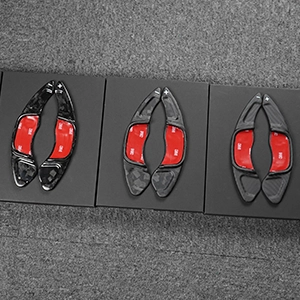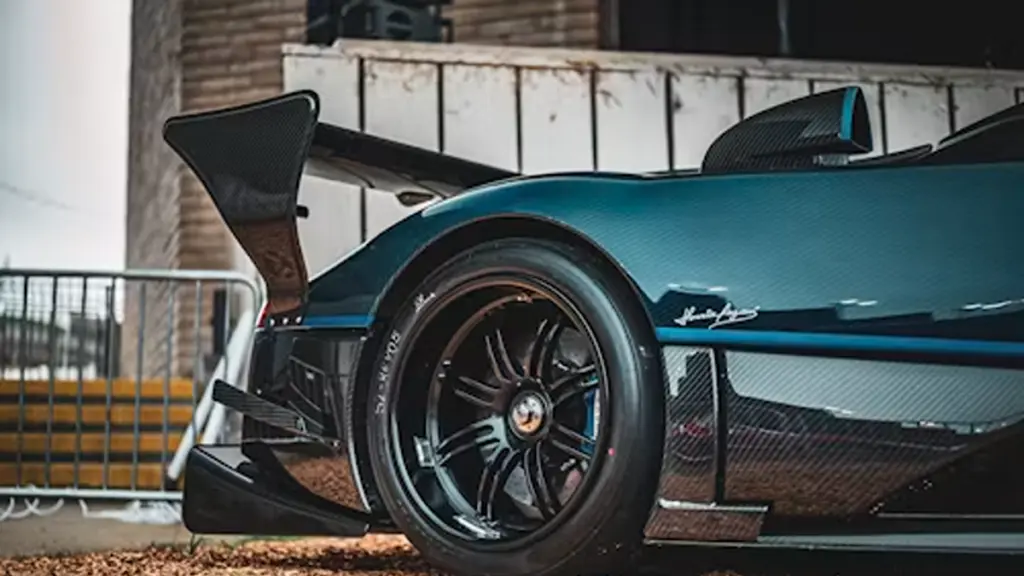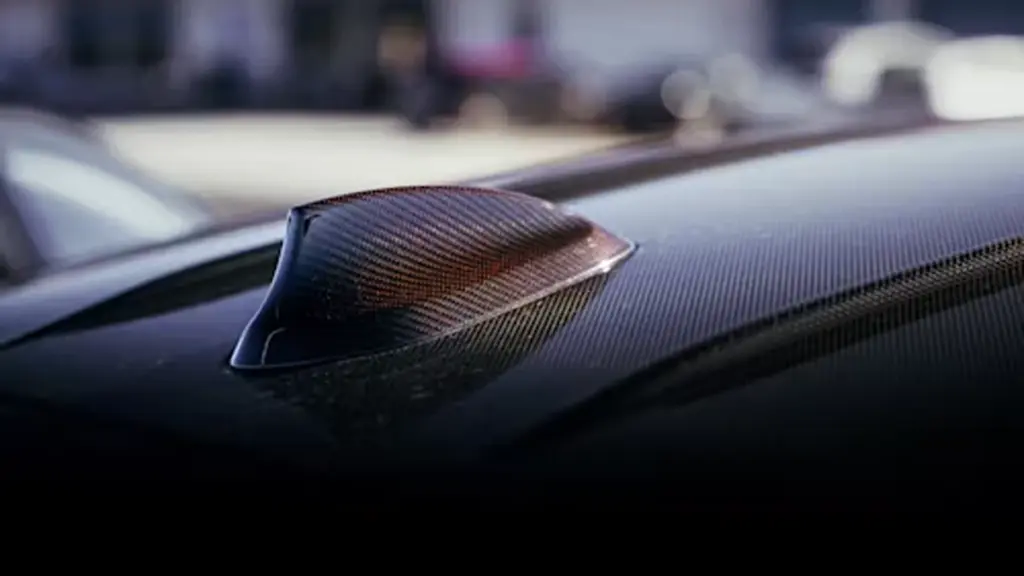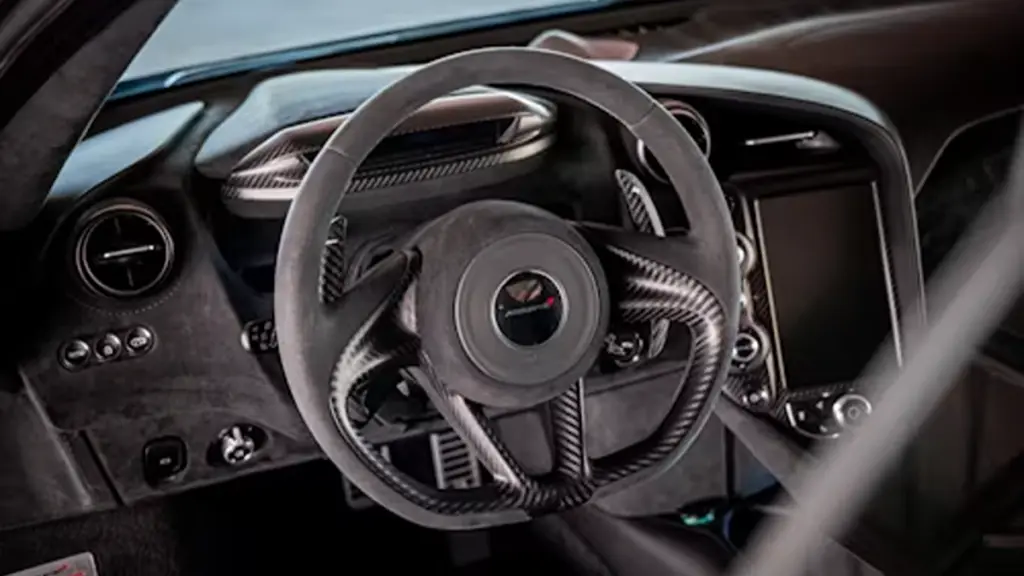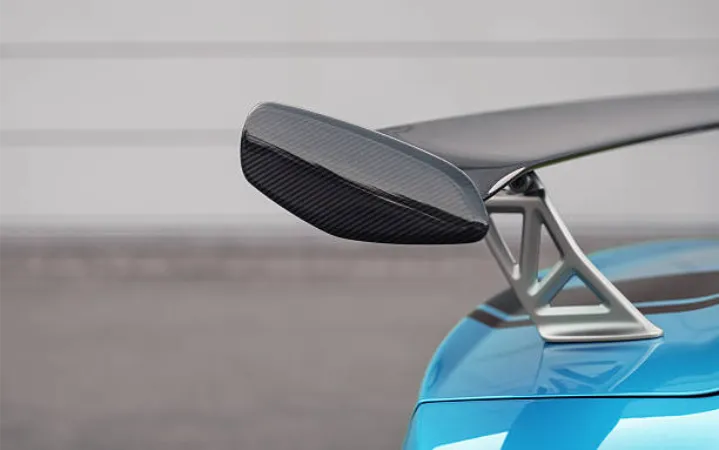
Have a product sample but want to manufacture it in carbon fiber?
For automotive aftermarket brands, equipment manufacturers, distributors, and product developers, converting an existing component into a carbon fiber version can be an effective way to expand product lines and develop differentiated products.
However, producing custom carbon fiber parts involves more than simply copying the shape of an existing product.
A successful project requires dimensional evaluation, mold development, material selection, sample production, quality inspection, and a repeatable manufacturing process.
At Dongguan Shasha Carbon Fiber, we work with B2B customers to develop customized carbon fiber components based on physical samples, technical drawings, and 3D models.
In this guide, we explain how an existing product can be developed into a carbon fiber component, what information buyers should prepare, and how the OEM/ODM manufacturing process works.
1. Can You Make Carbon Fiber Parts from an Existing Sample?
Yes. Many custom carbon fiber projects begin with an existing physical component.
For example, an automotive aftermarket brand may have an original plastic interior trim panel and want to develop a carbon fiber version for its product catalog.
Similarly, an industrial equipment manufacturer may want to replace an existing housing or cover with a carbon fiber component.
Depending on the product, a manufacturer can use the original sample as a reference for:
- Overall shape and dimensions.
- Mounting positions and connection points.
- Surface geometry and appearance.
- Assembly interfaces.
- Product development requirements.
However, a physical sample alone may not provide all the information required for manufacturing.
The manufacturer must also consider material thickness, structural requirements, manufacturing tolerances, and whether the original design is suitable for composite production.
For this reason, technical evaluation is an important first step.
2. Step One: Product Evaluation and Technical Review
Before mold development begins, the manufacturer needs to understand the customer’s requirements.
At Shasha Carbon, the initial discussion typically focuses on the product’s intended application, reference information, manufacturing feasibility, and estimated order quantity.
What Information Should Customers Provide?
For an efficient project evaluation, customers should prepare:
Physical Sample or Technical Drawings
An existing product, 2D engineering drawing, or 3D CAD file can help define the required geometry.
Product Application
Explain how and where the component will be used.
For automotive products, include the vehicle model, model year, and relevant fitment information.
Material Requirements
Specify whether the product is decorative, protective, or structural.
Surface Finish
Indicate whether you prefer a glossy finish, matte finish, or another appearance.
Order Quantity
Provide the estimated initial order quantity and expected future demand.
Target Schedule
Share the desired development and delivery timeline.
This information helps the manufacturer determine whether additional engineering work, tooling, or design modifications may be required.
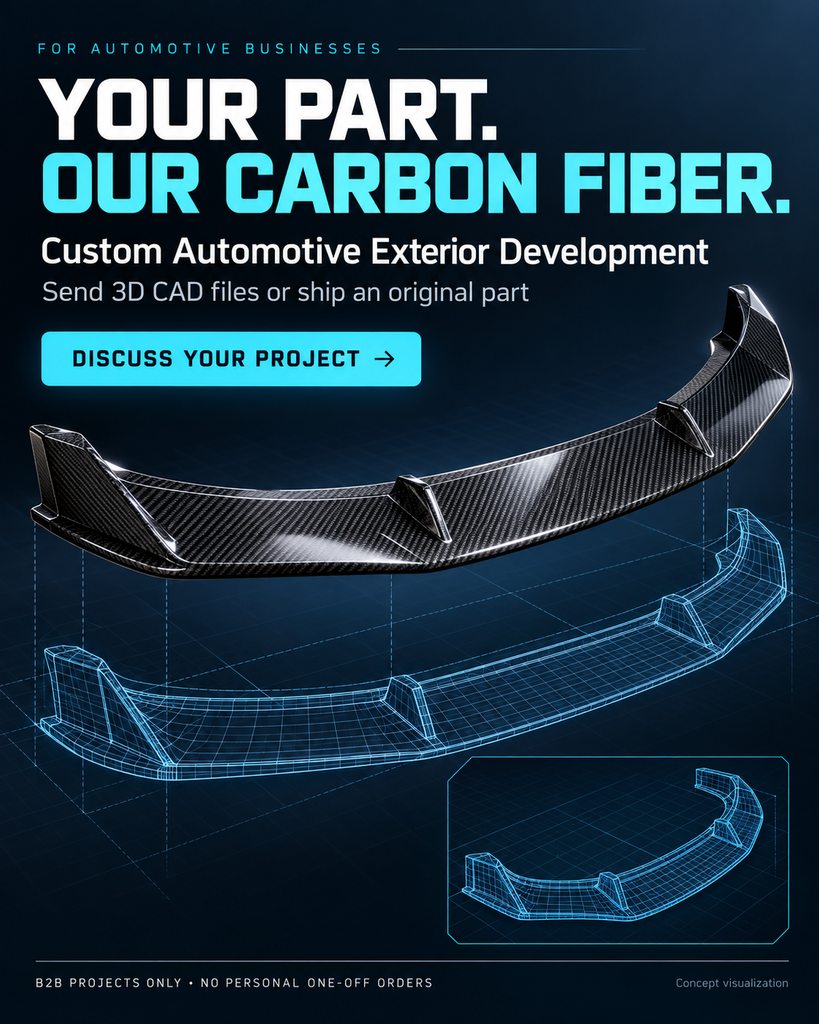
3. Step Two: Reverse Engineering and Mold Development
Once the product requirements are understood, the next stage is to develop a manufacturing solution.
For projects based on an existing physical sample, reverse engineering may be necessary.
What Is Reverse Engineering?
Reverse engineering involves studying an existing component to reproduce or adapt its geometry for manufacturing.
Depending on the product, this may include dimensional measurement, 3D scanning, CAD modeling, and evaluation of critical assembly features.
The goal is to establish an accurate design reference that can be used for tooling and sample development.
Why Is Mold Development Important?
Carbon fiber components often require dedicated molds to achieve the desired shape and surface quality.
The mold influences:
- Product dimensions.
- Surface appearance.
- Repeatability.
- Edge definition.
- Manufacturing efficiency.
- Final component fitment.
For automotive trim components, accurate mold geometry is particularly important because the finished product must align with surrounding vehicle parts.
Mold Development at Shasha Carbon
Dongguan Shasha Carbon Fiber supports mold development for selected OEM/ODM projects based on customer-provided samples or technical drawings.
Our team evaluates the product geometry and manufacturing requirements before confirming the tooling approach.
Mold development costs and timelines depend on product size, complexity, material requirements, and other project-specific factors.
For customers developing a new product line, tooling should be viewed as an initial investment supporting future batch production.
4. Step Three: Carbon Fiber Material Selection
After the tooling approach is confirmed, the next consideration is material selection.
Different carbon fiber products may require different reinforcement materials, resin systems, and laminate structures.
For many of our custom manufacturing projects, Shasha Carbon uses carbon fiber prepreg materials.
Prepreg carbon fiber contains resin that has already been incorporated into the fiber reinforcement under controlled conditions.
This material can support consistent resin content and controlled composite manufacturing when handled and processed correctly.
Why Choose Prepreg Carbon Fiber?
Potential advantages include:
- Controlled resin content.
- Consistent material preparation.
- Suitable processing for complex molded components.
- Repeatable laminate manufacturing.
- High-quality surface appearance when properly processed.
However, the appropriate material and laminate design must be selected according to the intended application.
A decorative interior trim panel and a load-bearing component may require different engineering considerations.
5. Step Four: Carbon Fiber Layup and Forming
Once the mold and materials are ready, sample manufacturing can begin.
A typical prepreg manufacturing process includes several stages.
CNC Cutting
Carbon fiber prepreg is cut into predetermined shapes according to the product design and laminate requirements.
Accurate cutting helps technicians position the material inside the mold.
Hand Layup
Technicians carefully place carbon fiber layers into the mold.
Fiber orientation, layer positioning, and surface appearance are considered during this process.
For products with complex curves, experienced manual layup is important to reduce wrinkles and improve material placement.
Vacuum Bagging
After layup, the material is sealed inside a vacuum bag.
Vacuum helps consolidate the laminate and remove trapped air during processing.
Autoclave Curing
For projects using autoclave-compatible prepreg systems, the laminate is cured under controlled temperature and pressure.
The curing cycle is selected according to the material system and manufacturing requirements.
Demolding and Trimming
After curing, the carbon fiber component is removed from the mold.
Excess material is trimmed, and critical edges or mounting features are processed according to the product specifications.
These manufacturing stages help transform carbon fiber prepreg into a finished composite component with the required geometry.
6. Step Five: Surface Finishing and Appearance Customization
For automotive and consumer-facing carbon fiber products, surface appearance is often a major purchasing consideration.
At Shasha Carbon, our finishing capabilities include sanding, coating, and polishing for suitable carbon fiber components.
Depending on the product requirements, customers may choose different appearance options.
Glossy Carbon Fiber Finish
A glossy finish creates a reflective surface that highlights the carbon fiber weave pattern.
This appearance is commonly selected for premium automotive interior and exterior trim.
Matte Carbon Fiber Finish
A matte finish provides a less reflective appearance.
It is suitable for customers looking for a more understated visual style.
Customized Appearance
Depending on technical feasibility, selected projects may support alternative weave patterns, color effects, or other surface requirements.
For B2B customers developing branded products, it is important to confirm the desired appearance during the sample approval stage.
A physical reference sample can help establish consistent finishing standards for future orders.
7. Step Six: Sample Inspection and Approval
Before mass production begins, the sample should be evaluated against the agreed specifications.
This is especially important for products developed from an existing physical component.
What Should Buyers Check?
Dimensional Accuracy
Confirm that critical dimensions meet the approved drawing or sample requirements.
Installation Fitment
For automotive parts, check whether mounting holes, clips, edges, and assembly interfaces align correctly.
Surface Quality
Inspect the weave pattern, coating appearance, surface smoothness, and visible defects.
Material and Construction
Verify that the component follows the agreed material and laminate specifications.
Packaging Requirements
For e-commerce sellers and distributors, packaging may also need to be evaluated before bulk production.
At Shasha Carbon, sample approval is an important stage of the OEM/ODM cooperation process.
Any required modifications should be discussed and confirmed before proceeding to production.
8. Step Seven: Small-Batch Testing and Mass Production
After sample approval, the project can move toward batch manufacturing.
For new products, starting with a small pilot order can be a practical approach.
Benefits of Small-Batch Production
Small-batch production allows businesses to:
- Evaluate market demand.
- Test product acceptance.
- Reduce initial inventory exposure.
- Verify packaging and logistics.
- Gather customer feedback.
- Prepare for larger repeat orders.
For established distributors and brands, larger production orders may improve manufacturing efficiency and simplify inventory planning.
Dongguan Shasha Carbon Fiber supports B2B cooperation for suitable small-batch and larger-volume projects, with order requirements determined by the product and manufacturing process.
Our goal is to establish a repeatable manufacturing approach that supports long-term cooperation.
9. Which Products Can Be Developed from Existing Samples?
Custom carbon fiber manufacturing can support multiple product categories.
Automotive Interior Components
Examples include:
- Center console trim.
- Dashboard decorative panels.
- Door trim.
- Steering wheel trim.
- Gear shift panels.
- Interior accessory covers.
These products often require careful attention to fitment, weave appearance, and surface finishing.
Automotive Exterior Components
Examples include:
- Front lips.
- Rear spoilers.
- Mirror covers.
- Exterior trim panels.
- Selected body accessories.
The manufacturing approach depends on the component’s geometry, installation method, and intended use.
Industrial and Consumer Product Housings
Carbon fiber can also be used for selected equipment covers, electronic housings, drone shells, and other customized components.
For these projects, the scope of supply must be clearly defined.
For shell-only projects, Shasha Carbon supplies the carbon fiber shell or enclosure only. Internal components such as motors, batteries, electronics, drivers, propulsion systems, and other accessories must be supplied or specified separately by the customer.
This distinction is important when developing products that contain electronic or mechanical systems.
10. Why Work with Dongguan Shasha Carbon Fiber?
Choosing a suitable manufacturing partner is an important part of successful product development.
Dongguan Shasha Carbon Fiber focuses on customized carbon fiber manufacturing for business customers.
With approximately 8 years of carbon fiber manufacturing experience and a 6,000-square-meter factory, our production operation supports a range of composite manufacturing processes.
Our capabilities include:
- Carbon fiber prepreg cutting.
- Hand layup.
- Vacuum bagging.
- Autoclave curing.
- Hot press forming.
- Mold development.
- Trimming and polishing.
- Surface coating.
- Product inspection.
We support OEM/ODM projects based on customer-provided physical samples, 2D drawings, and 3D CAD files, subject to technical feasibility.
Our services are designed for:
- Automotive aftermarket brands.
- Wholesale distributors.
- E-commerce sellers.
- Industrial product manufacturers.
- Product development companies.
- Other B2B buyers requiring carbon fiber components.
Our Cooperation Process
Customer Sample or Drawing → Technical Evaluation → Mold Development → Sample Production → Sample Approval → Batch Manufacturing
For business customers, this structured process helps establish clear expectations for product development and production.
We focus on B2B manufacturing projects rather than individual one-piece personal customization.
Frequently Asked Questions
Can I manufacture carbon fiber parts from an original plastic sample?
Yes. An existing plastic component may serve as a reference for developing a carbon fiber version. However, the manufacturer must evaluate the geometry, wall thickness, mounting features, and manufacturing feasibility before confirming the design.
Do I need a 3D drawing for custom carbon fiber manufacturing?
Not necessarily. A physical sample or 2D drawing may be sufficient to begin technical evaluation. Additional CAD modeling or measurement may be required before mold development.
Is a new mold required for every custom product?
Not always. Tooling requirements depend on the product geometry and whether suitable existing tooling is available. New designs frequently require dedicated molds.
How long does carbon fiber sample development take?
Development time depends on product complexity, tooling requirements, material availability, and the number of sample revisions. The manufacturer should confirm an estimated schedule after evaluating the project.
Can I customize the carbon fiber weave and finish?
Depending on the material and manufacturing process, customers may choose different weave patterns and surface finishes. Available options should be confirmed before sample production.
Does Shasha Carbon accept small-batch orders?
Shasha Carbon supports suitable B2B small-batch projects, with minimum order quantities depending on product specifications and manufacturing requirements.
Can Shasha Carbon help develop non-automotive carbon fiber products?
Yes. We can evaluate selected carbon fiber housings, shells, and other composite components for different industries, based on the customer’s drawings, samples, and project requirements.
Conclusion
Developing custom carbon fiber parts from an existing sample involves several important stages, including technical evaluation, reverse engineering, mold development, material selection, sample manufacturing, and quality inspection.
For brands, distributors, and manufacturers, understanding these steps can help reduce development risks and improve communication with suppliers.
At Dongguan Shasha Carbon Fiber, we work with B2B customers to develop carbon fiber components according to their product requirements.
Whether you are expanding an automotive accessory catalog or developing a carbon fiber product for another industry, a clear technical specification and an approved sample provide a strong foundation for successful manufacturing.
Have a product sample or 3D drawing?
Contact Shasha Carbon to discuss your OEM/ODM carbon fiber manufacturing project.
Send us your product information, reference sample, expected order quantity, and surface finish requirements so our team can evaluate the manufacturing solution.
Shasha Carbon — Custom Carbon Fiber Manufacturing for Global B2B Customers.