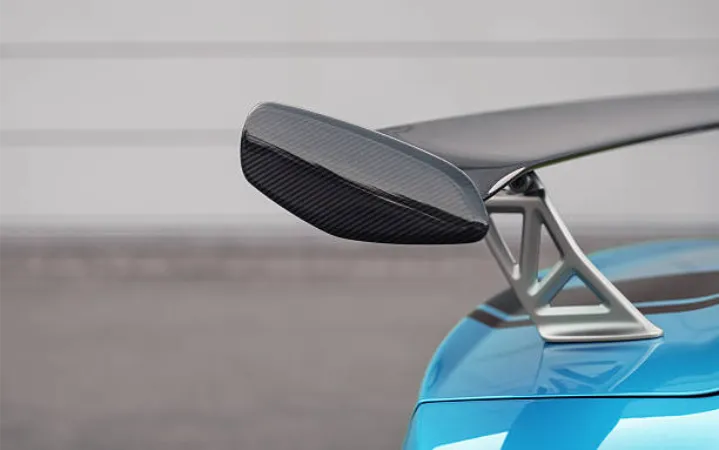
क्या कार्बन फाइबर टाइटेनियम से अधिक मजबूत है?? In some applications, yes — especially when you need maximum strength with minimal weight. But strength alone does not tell the full story. If your project involves heavy impact, repeated stress, or harsh operating conditions, titanium may deliver better long-term performance. Understanding how these materials differ helps you choose the right option for durability, वज़न, लागत, and real-world reliability.
Why People Compare Carbon Fiber and Titanium
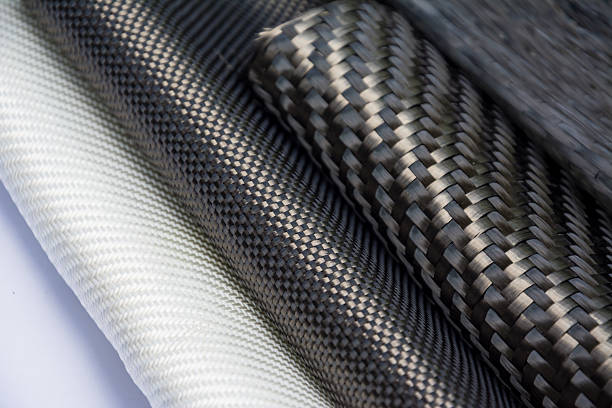
The Competition for Lightweight Strength
The main reason these two materials get compared is their performance in weight-sensitive industries. When an engineer needs to cut weight without giving up strength, both carbon fiber and titanium are top contenders.
Carbon fiber often has the edge with a higher strength-to-weight ratio. This makes it the go-to material for aerospace components and high-performance automotive parts, where shaving off every possible gram directly impacts fuel efficiency and speed.
Different Strengths for Different Applications
The best material depends on the specific kind of stress a part will face. कार्बन फाइबर, like the Japan Toray 3K material we use at Shasha, excels in tensile strength—its ability to resist being pulled apart. This is ideal for components under consistent, directional loads.
Titanium, वहीं दूसरी ओर, is superior in toughness and impact resistance. It’s better suited for parts that might face sudden, forceful impacts or require extreme durability over a long lifecycle, like landing gear or medical implants.
Basic Properties of Titanium Alloys
ताकत, वज़न, and Temperature Performance
Titanium’s specific gravity is 4.5, making it only 57% as dense as steel, yet it’s about three times stronger than aluminum. Its specific strength is one of the highest among common industrial metals—around 3.5 times that of stainless steel.
These alloys also hold up well at high temperatures, maintaining good mechanical properties around 500°C. That’s far beyond the thermal limits of aluminum and magnesium alloys.
Corrosion Resistance and Elastic Properties
Titanium has excellent corrosion resistance, which is why it’s used in harsh chemical processing and marine environments. A key trade-off is its low stiffness. With an elastic modulus just 55% that of steel, it’s not always ideal for applications needing high structural rigidity.
The alloys come in different types, like alpha, alpha-beta, and beta-phase. Each offers a different balance of properties such as weldability, ductility, and heat treatability.
Source True Dry Carbon with Guaranteed Fitment
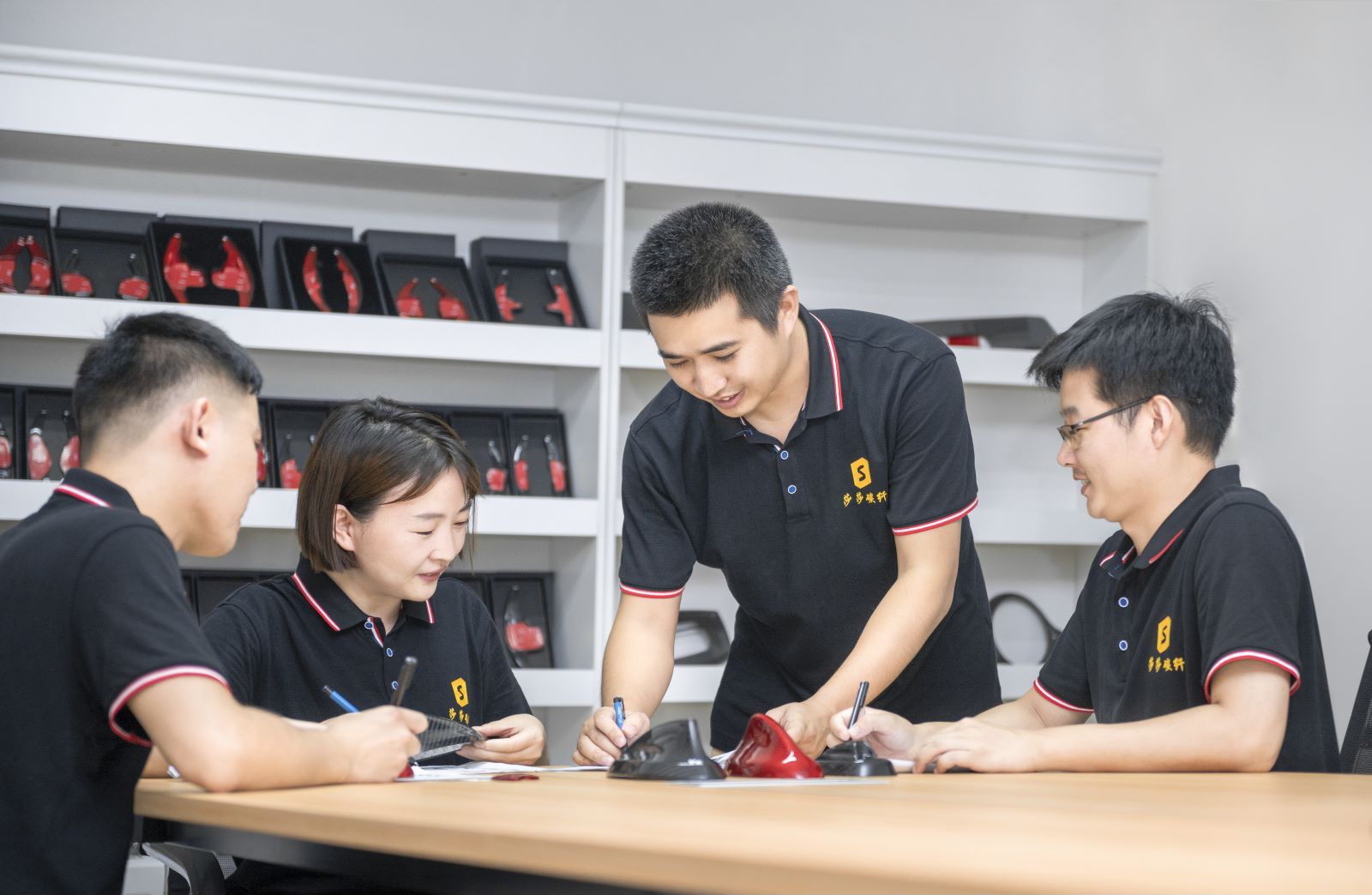
Basic Properties of Carbon Fiber Composites
High Strength, कठोरता, and Low Density
The performance of carbon fiber composites comes down to a few key metrics. Compared to traditional metals, its properties create a massive advantage in applications where high strength and low mass are critical.
- तन्यता ताकत: Carbon fiber offers a tensile strength between 3.5 और 6.0 जीपीए, making it up to five times stronger than steel.
- कठोरता: With a Young’s Modulus of 200–800 GPa, it is roughly twice as stiff as steel, meaning it resists deformation under load far more effectively.
- घनत्व: Its very low density of 1.6 g/cm³ is a major advantage over metals like titanium (4.5 जी/सेमी³), directly contributing to its superior strength-to-weight ratio.
The Role of Toray 3K Fiber in Material Performance
और शाशा कार्बन, we exclusively use imported Japan Toray 3K Carbon Fiber as the raw material for every product. This choice is deliberate. We use only imported Toray fiber because it creates a stronger 3D depth effect and a superior texture compared to standard domestic materials. Using a premium base material is the only way to ensure the final composite parts achieve their full potential in both structural strength and visual clarity.
Tensile Strength and Stiffness: Carbon Fiber vs Titanium
| संपत्ति | कार्बन फाइबर कम्पोजिट | Titanium Alloy |
|---|---|---|
| तन्यता ताकत | Up to 6,000 MPa | ~900 MPa |
| कठोरता (कठोरता) | उच्च | निचला |
| घनत्व (वज़न) | ~1.6 g/cm³ | ~4.5 g/cm³ |
A Direct Comparison of Material Properties
When you look at the raw numbers, the difference is clear. High-quality carbon fiber composites can reach a tensile strength of 6,000 MPa, which is about 6 को 7 times higher than the typical 900 MPa of common titanium alloys. This means it takes significantly more force to pull a carbon fiber part to its breaking point.
Carbon fiber is also much stiffer, or more rigid. This allows engineers to design components that don’t bend or flex under load, without needing the bulk and weight of a metal part. But you have to remember that carbon fiber is a composite, not a monolithic metal like titanium. Its strength is directional, depending entirely on the fiber weave and how it’s manufactured. Titanium is strong in all directions, but it pays a high penalty in weight.
How Autoclave Molding Enhances Structural Strength
The potential of a raw material like Japan Toray 3K Carbon Fiber means little without the right manufacturing process. This is where the method makes all the difference. We use Autoclave Molding, a high-pressure, high-temperature process that forces the carbon fiber and resin to bond perfectly, eliminating voids and weak spots.
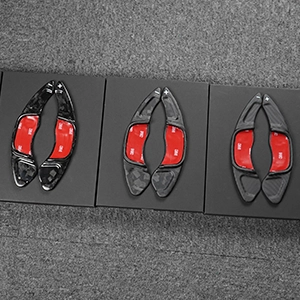
This technology produces parts that are substantially lighter and harder than components made with basic hand lay-up methods. The pressure inside an autoclave ensures maximum material integrity and a clear, uniform weave. For precision parts like paddle shifters and interior trims, this process guarantees the superior structural strength needed for both performance and durability. It’s the difference between a true performance component and a simple cosmetic piece.
Impact Resistance and Damage Behaviour
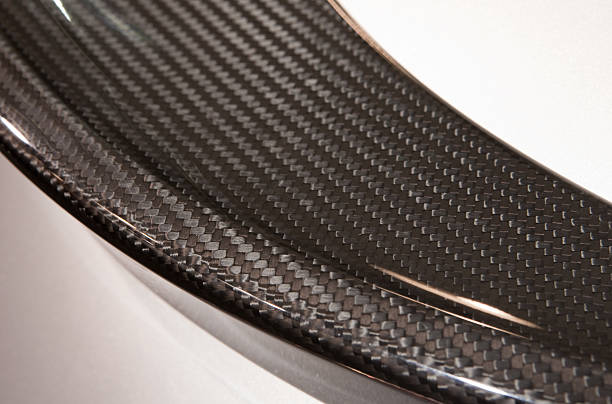
Understanding Carbon Fiber’s Brittle Failure Mode
The biggest misconception about carbon fiber is confusing its high tensile strength with toughness. They aren’t the same. Metals like titanium are ductile—they have a defined yield strength, meaning they will bend and deform to absorb energy from an impact. This deformation gives you a clear warning sign before a total failure.
Carbon fiber composites don’t have that safety net. The material is inherently brittle. Under a sharp, localized impact, it doesn’t bend; it can fracture. This leads to matrix cracking or a catastrophic failure with little to no advanced warning. This is its primary vulnerability compared to metallic alloys.
How Autoclave Molding and UV Coatings Enhance Durability
A carbon fiber part’s real-world durability depends entirely on how it’s made. To counter its brittle nature, we use a high-pressure, high-temperature process called **Autoclave Molding**. This method compacts the carbon layers and resin, creating parts that are significantly harder and more structurally sound than those made with basic hand lay-up methods.
The surface is just as important. A thick **High-Gloss UV-Resistant Clear Coat** is applied as a final protective layer. This isn’t just for aesthetics; it shields the epoxy resin from UV degradation and oxidation, which can weaken the composite over time. These two steps are essential for turning a raw material into a finished component that can actually withstand daily use.
Weight and Strength-to-Weight Ratios
Understanding the Superior Ratio
The numbers don’t lie. Carbon fiber composites deliver 2 को 3 times the strength-to-weight performance of titanium alloys. This isn’t a small difference; it’s a massive gap that dictates material choice in high-stakes industries.
The core reason is density. Carbon fiber comes in at around 1.8 जी/सेमी³, while titanium is much heavier at 4.5 जी/सेमी³. That makes carbon fiber roughly 2.5 times lighter for the same physical volume. This single metric is why engineers in aerospace and performance automotive sectors choose carbon fiber when every gram impacts fuel efficiency, रफ़्तार, or handling.
How Dry Carbon Maximizes Lightness and Strength
Not all carbon fiber is created equal. The manufacturing process directly impacts the final part’s strength-to-weight ratio. We use an Autoclave Molding process, which involves high pressure and high temperature to form parts. This technique produces components that are inherently lighter and harder than what you get from traditional hand lay-up methods.
By combining this technology with premium Japan Toray 3K Carbon Fiber, we ensure maximum structural integrity without adding unnecessary mass. This is especially important for our specialization in “Precision Small Components.” For parts like paddle shifters and interior trims, this lightweight advantage enhances a vehicle’s responsiveness and aesthetic without compromising strength.
गर्मी, Fatigue and Corrosion Performance
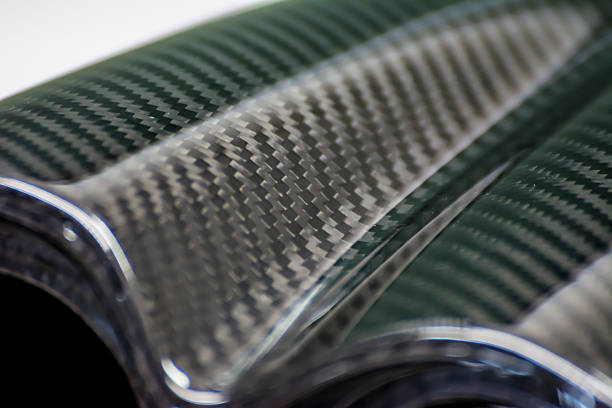
Comparing Thermal and Chemical Resistance
Titanium excels in high-temperature applications. With a melting point of 1,668°C and better thermal conductivity, it is far more suitable for parts that need to dissipate heat. The resin matrix in carbon fiber composites typically limits its performance in extreme heat environments.
When it comes to cyclical stress, titanium demonstrates greater overall fatigue resistance and toughness. It’s better at resisting crack propagation in harsh environments. Carbon fiber has excellent resistance to fatigue when under tension, but it’s a more brittle material and doesn’t handle impacts as well.
Both materials offer impressive corrosion resistance. Titanium, however, has a distinct advantage. It naturally forms a protective oxide layer on its surface, which gives it superior resistance against a wider range of acids and bases.
How UV-Resistant Coatings Enhance Durability
A carbon fiber part’s long-term performance isn’t just about the fiber; it’s heavily dependent on the quality of its resin and surface protection. Raw epoxy is vulnerable to UV degradation, which can break down its structure and cause it to look yellow or faded over time.
To counter this, all Shasha Carbon parts are finished with a High-Gloss UV-Resistant Clear Coat. This protective layer is a critical final step. It provides crucial Anti-Oxidation and Non-Yellowing properties, preserving both the structural integrity and the visual depth of the carbon weave for years.
Cost and Machining vs Composite Manufacturing
Comparing Manufacturing Complexity and Initial Cost
Titanium is simpler and more affordable to produce. It can be machined and formed using well-established metalworking techniques that are straightforward and cost-effective. The entire supply chain and knowledge base for working with titanium as a metal are mature and widely accessible.
Carbon fiber manufacturing is a different story. It’s a highly complex and labor-intensive process with multiple stages. Production involves weaving the raw fibers, impregnating them with resin, layering the material into a mold, and curing it under high pressure and temperature. Each step requires specialized equipment and expertise, driving up the initial cost significantly compared to titanium.
How Autoclave and CNC Processes Impact Final Quality
The higher investment in carbon fiber pays off in the final product’s quality, especially when using advanced methods. और शाशा कार्बन, we use Autoclave Molding, which involves high pressure and temperature to cure parts. This creates components that are significantly lighter, मजबूत, and have a much clearer, more consistent weave pattern than parts made with basic hand lay-up methods.
Precision in finishing is just as important. Instead of manual grinding, we employ CNC cutting for all our parts. This automated process ensures every edge is clean and all mounting points are perfectly aligned. The result is a guaranteed 1:1 fitment with the original vehicle components, a critical detail for automotive accessories that justifies the investment in superior technology.
Where Carbon Fiber Makes More Sense Than Titanium
Superior Strength-to-Weight Performance
The main reason to choose carbon fiber is its strength-to-weight ratio, which is typically 2 को 3 times better than titanium. This makes a massive difference in applications where every gram counts. In aerospace, lighter components mean better fuel efficiency. For high-performance automotive parts, weight reduction directly improves speed and handling.
This advantage isn’t just about being light. The material also offers excellent resistance to bending and compression. This allows engineers to design strong, rigid structural parts that can handle specific directional stress without the weight penalty of metal.
How Toray Fiber and Autoclave Molding Create Lighter, Harder Parts
Not all carbon fiber parts are created equal. The quality of the raw material and the manufacturing process determine the final performance. और शाशा कार्बन, we use imported Japan Toray 3K carbon fiber. This specific material provides a stronger 3D weave and a visibly superior texture compared to common domestic alternatives.
The forming process is just as critical. We use Autoclave Molding, which involves high pressure and high temperatures to cure the parts. This creates components that are significantly lighter and harder than those made with traditional, cheaper hand lay-up methods. This combination of premium fiber and an advanced forming process ensures our automotive parts achieve maximum strength at the lowest possible weight.
How Shasha Uses Carbon Fiber for Lightweight Automotive Parts
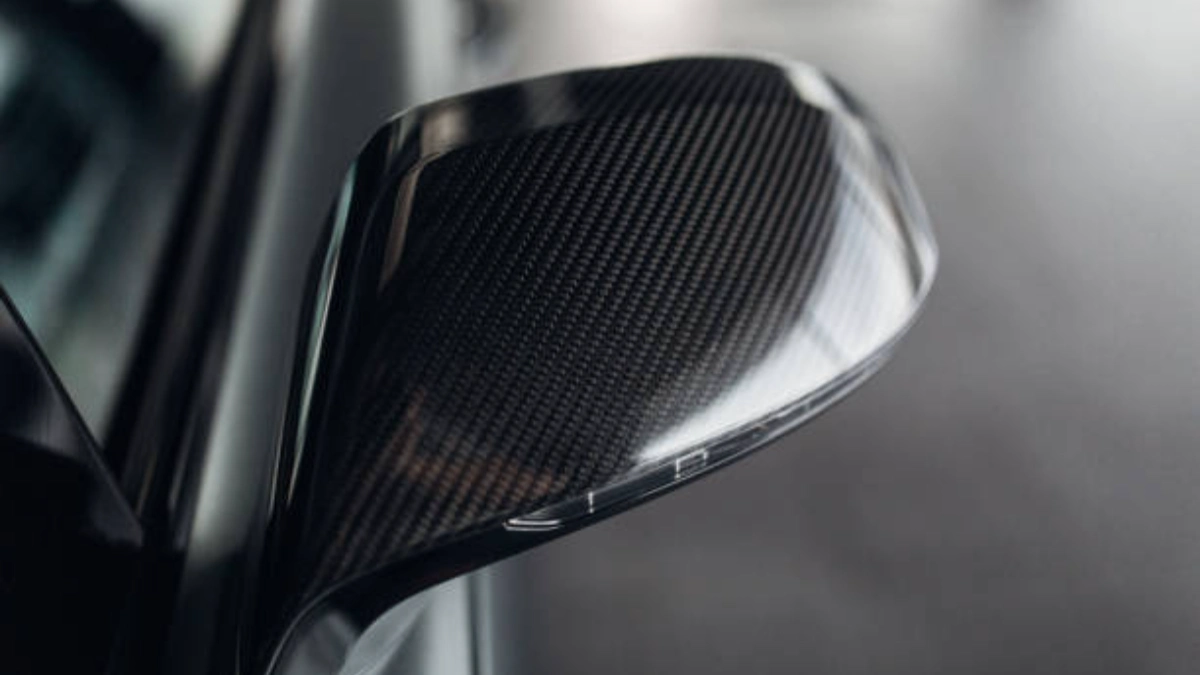
The Process from Raw Material to Formed Part
Everything starts with sourcing the right materials. We use imported Japan Toray 3K carbon fiber, which provides a superior texture and 3D depth compared to common domestic alternatives. This premium fiber is paired with specialized resin systems. We then create precise molds engineered to handle high temperatures and pressure. Technicians carefully layer the carbon fiber sheets inside these molds and apply vacuum bagging to ensure even pressure distribution for consistent quality before the curing stage.
Using Autoclave Technology for Strength and Low Weight
Our core manufacturing method is Autoclave Molding. After a part is layered and bagged, it goes into an autoclave for high-pressure and high-temperature curing. This process forces the resin deep into the carbon fiber weave, eliminating voids and creating a component with superior structural integrity. The result is a part that is significantly lighter and harder than those made with traditional hand lay-up methods. You can see the difference in the finished product—the weave pattern is clearer and more defined, a direct sign of a better manufacturing process.
अक्सर पूछे जाने वाले प्रश्नों
क्या कार्बन फाइबर टाइटेनियम से अधिक मजबूत है??
It depends on how you measure strength. Carbon fiber has a much higher tensile strength-to-weight ratio, making it stronger for its weight. Titanium, however, is tougher and more resistant to impacts and fatigue. इसलिए, for lightweight strength, carbon fiber wins, but for durability and impact resistance, titanium is superior.
क्या कार्बन फाइबर टाइटेनियम से हल्का है??
हाँ, carbon fiber is significantly lighter. With a density of about 1.6 जी/सेमी³, it is almost three times lighter than titanium, which has a density of 4.5 जी/सेमी³. This weight advantage makes carbon fiber the ideal choice for applications where minimizing weight is the top priority, like in high-performance automotive parts and aerospace.
Is carbon fiber more brittle than titanium?
हाँ, carbon fiber is more brittle. While extremely strong, it tends to crack or shatter suddenly upon sharp impact. Titanium is more ductile, meaning it can bend or deform under stress before failing. This makes titanium a better material for applications that need to withstand sudden shocks or impacts.
When should you choose carbon fiber over titanium?
You should choose carbon fiber when weight reduction is critical and the part is not likely to experience high-impact forces. Its exceptional strength-to-weight ratio and stiffness are perfect for aerospace, racing, and high-performance sports equipment where every gram counts.
Which is more durable, carbon fiber or titanium?
Titanium is generally more durable in real-world use. It resists dents, स्क्रैच, and corrosion very well and maintains its integrity over decades. Carbon fiber can suffer from hidden internal damage from impacts, which is difficult to detect and repair, making it less durable in environments with potential for physical damage.
Can you use carbon fiber and titanium together on a car?
हाँ, high-performance cars often use both materials to get the best of each. Titanium is used for components that need heat and impact resistance, like exhaust systems or suspension parts. Carbon fiber is used for body panels, chassis, and interior trim to save weight. Engineers must be careful to insulate them from each other to prevent galvanic corrosion where they connect.
अंतिम विचार
Carbon fiber and titanium each have clear advantages, but raw strength alone should not decide your material selection. The manufacturing process behind the material plays an equally important role in long-term performance, fitment accuracy, and product reliability. Low-quality carbon fiber parts may look similar at first, but poor layup methods and inferior materials often lead to surface defects, weak structural consistency, and premature failure over time.
पर Shasha Carbon, we use autoclave molding and imported Toray carbon fiber to deliver precise fitment, stable structural performance, and a cleaner surface finish for demanding applications. If you want to evaluate the real difference in carbon fiber quality, you can request a sample kit or contact us today to discuss your project requirements and the latest product options.